
Continue the conversation
Sometimes the most useful step is to describe your situation out loud to someone who has lived through similar industrial finance tensions.
If you recognise pieces of your own experience in these reflections, you are not alone. Many industrial teams in Canada carry the same mix of pride in what has been built and unease about how some decisions were made. Sharing those stories with someone outside the immediate project can help separate signal from noise and prepare for more grounded conversations with your own advisers and lenders. We will not offer templates or training; we will ask careful questions, listen for where the story feels thin, and respect the boundaries of professional advice.
Talk with usWhy we bother to debrief
From informal corridor conversations to a more deliberate way of learning from industrial finance decisions

We used to treat project close‑out reports as a formality: a few slides,
some lessons learned, and then everyone moved on. Over time, we realised
that the most valuable insights rarely made it into those decks. They
surfaced in corridor conversations, late‑night emails, or quiet remarks
during site walks. This page tries to capture that more candid layer of
reflection and give it a clearer structure.
Our focus remains firmly on industrial settings where capital decisions interact with long‑lived assets, maintenance cycles, and regulatory expectations. We look at how financing terms, operational realities, and governance processes intersect, without drifting into product promotion or formal training. When we describe patterns, we do so as peers comparing notes, not as instructors promising a method that will solve every problem. Any scenarios we reference are simplified and anonymised, and none should be treated as predictions or tailored guidance for your organisation.
Because we work within the Canadian context, we keep an eye on how local norms around disclosure, environmental review, and lender communication influence what counts as a reasonable plan. We encourage readers to bring these reflections into conversations with their own legal, tax, and financial professionals, who can consider the full details of each situation. Nothing here is an offer, solicitation, or personal recommendation. Results may vary even when projects look similar, and past performance does not guarantee future outcomes. Our goal is simply to make the next industrial finance conversation a little clearer than the last.
Sitting with uncomfortable decisions
There is a particular kind of silence that follows a difficult capital review. The room
empties, the slides are saved, and yet the decision still feels unsettled in our minds.
Over the years, we have learned to treat that feeling as a signal rather than an
inconvenience. Instead of pushing it aside, we sit with it and ask what our discomfort
is trying to tell us about the way we frame industrial finance questions. On this page,
we gather those post‑meeting reflections into a more deliberate practice. We talk about
how we reconstruct the original story of a project, how we distinguish between bad luck
and fragile assumptions, and how we trace the path a decision took through governance
and external negotiations. We write from within the Canadian context, where regulatory
expectations, environmental review, and lender practices shape which trade‑offs are even
on the table. Nothing here should be read as a training program or a set of
instructions; it is a peer‑to‑peer account of how practitioners think when no one is
presenting. Results may vary, and past performance does not guarantee future outcomes.
Making reflection a disciplined habit
How we run an informal Aftermath Review in industrial settings
When we apply our reflection framework, which we informally call the Aftermath Review, we start with stories rather than spreadsheets. We ask each person involved to describe the decision in their own words, without reaching for metrics too quickly. That narrative phase often surfaces quiet doubts, unspoken constraints, and practical workarounds that never appeared in the official documentation but strongly influenced how the project unfolded.
Only after those stories are on the table do we revisit the numbers, comparing original expectations with what actually happened. We pay attention to timing shifts, changes in operating patterns, and external events that altered the context. Throughout, we remind ourselves that the goal is not to rewrite history but to equip future versions of ourselves to ask better questions. Any insights we draw remain general observations, not personalised advice, and they should be tested with qualified professionals before being applied to specific industrial finance decisions.
We look closely at where early warning signs appeared in data or site observations but never reached formal decision forums.
We trace how small operational changes, like maintenance deferrals or staffing shifts, quietly altered the financial picture.
We compare how different stakeholders remember the same decision, revealing gaps in communication and expectations.
We record specific phrases or questions that, in hindsight, would have changed the tone of key meetings.
We emphasise that reflection is about strengthening future resilience, not assigning blame for outcomes that no one could fully control.
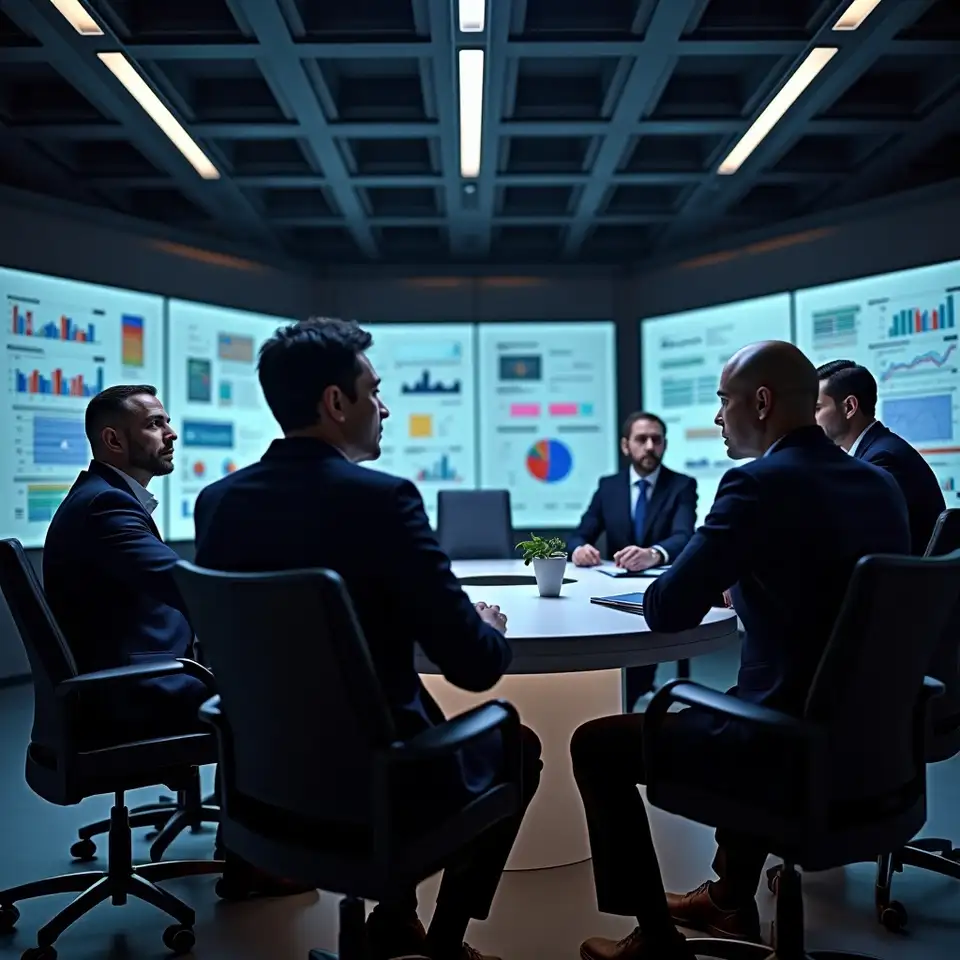
Turning project memories into practical insight
Learning from past choices
Looking back to think ahead
We revisit past industrial finance choices not to assign blame, but to recover the questions we wish we had asked when the decisions still felt reversible.
We still remember standing in a plant corridor after a long review, looking at a row of aging equipment that somehow kept running despite every spreadsheet saying it should have been replaced years earlier. On paper, the replacement case looked clean. In reality, the project had stalled under the weight of competing priorities, partial information, and shifting external conditions. On this page, we speak in the voice many of us have used in those quiet moments after the meeting: what did we miss, and how would we approach the same industrial finance decision differently now. Rather than presenting a method as a product, we walk through how we informally debrief past projects, identify where our judgment was stretched, and turn those reflections into sharper questions for future work. We focus on capital‑intensive settings in Canada, where regulatory context, lender expectations, and internal governance all shape the room we have to manoeuvre. Nothing here is a recommendation, a training program, or a substitute for tailored professional advice; it is a structured way to think aloud about decisions that still echo through current operations. Results may vary, and past performance does not guarantee future outcomes.

Moments of reflection
Images that capture the quiet, reflective moments when industrial finance decisions are felt
most clearly, long after the formal meetings have ended.